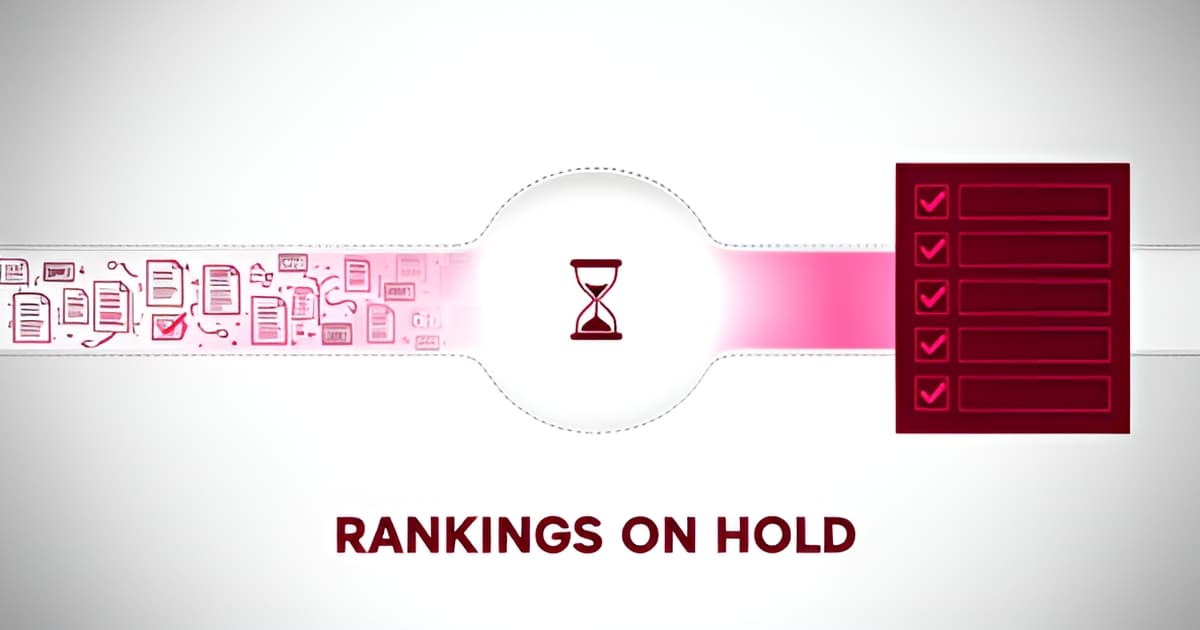
Here's the uncomfortable update: this month's rankings don't move. Not because nothing happened in the unrestricted AI chat market, but because the source pipeline that feeds our testing queue came back empty. Both the scraped article feed and the supplementary snippet feed arrived blank for this compilation cycle, which means no new claims to test, no new policies to read, no new behavior to verify. We could have padded the page with recycled entries and affiliate-friendly filler. Plenty of 'top uncensored AI' listicles would have. That's exactly the behavior this index exists to call out in others, so we're not going to model it ourselves. An empty report is preferable to an unverified one. That's not an editorial flourish; it's the whole brand. If you've read our filter-transparency matrix before, you know the rule: a cell publishes only after we've tested what a platform actually does, not what its landing page promises. Nothing this cycle can meet that bar, so nothing publishes. What follows is a plain accounting of what that means for you, why the gap happened, and what to expect when the pipeline is fixed.
Key points
- Both the scraped-article feed and the supplementary snippet feed arrived empty for the October 31, 2026 cycle.
- Under the index's verification standard, nothing can be added to the filter-transparency matrix without behavioral testing, so no cells publish this month.
- Monthly rankings carry forward unchanged rather than being refreshed on stale or secondhand claims.
- The gap matters because 'unfiltered' AI chat platforms change moderation posture, logging, and retention terms frequently, and stale rankings mislead readers.
- Readers can still use the existing verified entries, and the waitlist for FlirtAlly (18+, in beta) remains open at flirtally.com.
The compilation process for October 31, 2026 returned two empty fields: the scraped article content and the additional source snippets. Zero articles ingested, zero snippets ingested. Without source material, there are no claims to run through verification, no terms-of-service changes to read, no user reports to chase down via permalinks. The consequence is mechanical, not dramatic. No new matrix cells can publish, because a matrix cell is a statement that we tested a platform's behavior and found it matched (or didn't match) its marketing. You can't test a claim you never received. No ranking entries can be added or demoted, for the same reason. And no brand deep-index can be drafted, because a deep-index without a source document is just us writing fiction about a company's moderation policy. We'd rather tell you the pipeline broke than pretend it didn't.
The unrestricted AI chat market has a specific pathology: platforms market themselves as 'unfiltered' while the catch sits in the terms of service. Hidden content logging. Retroactive moderation applied to conversations you thought were private. Data retention windows that outlast your account. Quiet policy reversals announced in a changelog nobody reads. Testing those claims takes time and a willingness to read the boring documents. The listicles that dominate search results skip all of it. They rank platforms based on marketing copy, affiliate terms, and whatever a Reddit thread asserted last week. When they get it wrong, the cost lands on you: you sign up for a platform believing your conversations aren't logged, and six months later you find out they were retained, reviewed, or handed over. Our answer to that is a simple publishing rule. A claim gets tested before it gets printed. If the test can't happen, the cell stays empty. This cycle, the test couldn't happen for any new platform, so every new cell stays empty. The existing verified entries stand, because they were verified when they published and nothing in this cycle's (nonexistent) material contradicts them.
You might reasonably ask whether holding publication is overcautious. It isn't, and here's the reason: the adult AI chat sector moves fast on exactly the dimensions we track. Moderation posture, pricing, privacy terms, and retention policies change month to month, sometimes without announcement. A platform that verified as genuinely unfiltered in September can tighten its filters, start logging prompts, or rewrite its terms in October. That's why the index runs on a monthly cadence at all. The flip side is that a missed cycle risks staleness, and staleness in this market means someone makes a privacy decision based on outdated information. We take that risk seriously, which is why the fix is already in motion: re-run the scrape, request source URLs directly where the feed failed, and compile the next cycle from verified material. If a platform quietly changed its terms during the gap, that will show up as a policy-shift explainer and, where warranted, a demotion with the reason stated in plain language. Demotions here always come with the catch named. That's the deal.
Three things remain solid this month. First, the existing filter-transparency matrix entries: every published cell reflects verified behavioral testing from its cycle, and the claims-versus-actual-behavior comparisons still hold unless a platform has changed since its last verification. Second, the brand deep-indexes and policy reads already on the site; those documents were built from real terms of service and real testing, and they're still the fastest way to understand what a given platform logs, retains, and moderates. Third, the disclosure that's been on every surface and stays there: NoFilter Index is operated by the makers of FlirtAlly, our own 18+ AI chat product, currently in beta with the waitlist open at flirtally.com. We keep that disclosure in the footer and on the about page because you deserve to weigh our incentives when you read our verdicts. One boundary stays firm while FlirtAlly is in beta: no ratings, no user quotes, and no comparative claims against platforms we've reviewed. Beta products don't get graded against shipped ones. When it ships, it goes through the same testing as everyone else, and if it fails, we'll say so.
It's worth naming what an empty cycle actually demonstrates, because it's the thing that separates a tested index from a content farm. Anyone can publish a ranking. The hard part is the willingness to publish nothing when the evidence isn't there. Most 'uncensored AI' directories face zero cost for being wrong; their business model is traffic, not accuracy. Our cost for being wrong is the loss of the only asset we have, which is the assumption that a cell in our matrix means what it says. So when the pipeline fails, the honest output is a page like this one: an explanation of the gap, a restatement of the standard, and a commitment to re-verify before the next round of verdicts. If you're choosing between platforms in the meantime, borrow the same discipline. Read the terms of service yourself, look specifically for logging, retention, and moderation clauses, and treat any '100% unfiltered' banner as a claim to be tested rather than a fact to be trusted.
The October 31, 2026 cycle comes back empty, and we're publishing the emptiness rather than filling it. No new matrix cells, no ranking changes, no new deep-indexes, because nothing arrived that could be verified. The existing entries stand on their testing, the disclosure about FlirtAlly's makers operating this index stays where it's always been, and the FlirtAlly beta waitlist remains open for anyone curious. The next cycle gets a re-scraped pipeline and, where needed, direct source requests. Until then, the standard holds: if a claim hasn't been tested, it doesn't get printed. That rule costs us a month of fresh content. It buys you an index you can actually trust, and we think that trade is obvious.